Introduction
VESP Architects are proud to present their new passivhaus office in Ashburton, Devon; A workplace designed to support the practice’s day-to-day activities and embody the principles of architecture and construction that underpin our work. The project offered an opportunity to create an exceptional working environment whilst demonstrating our commitment to thoughtful design, low energy construction and material efficiency.
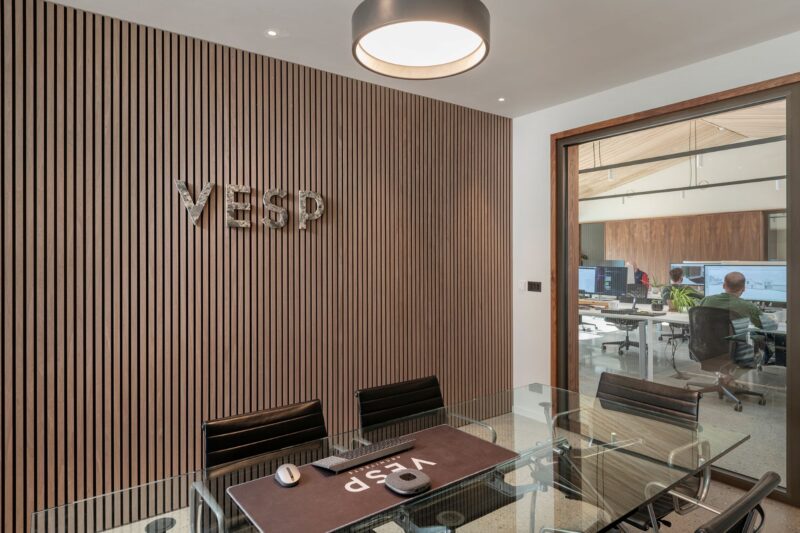
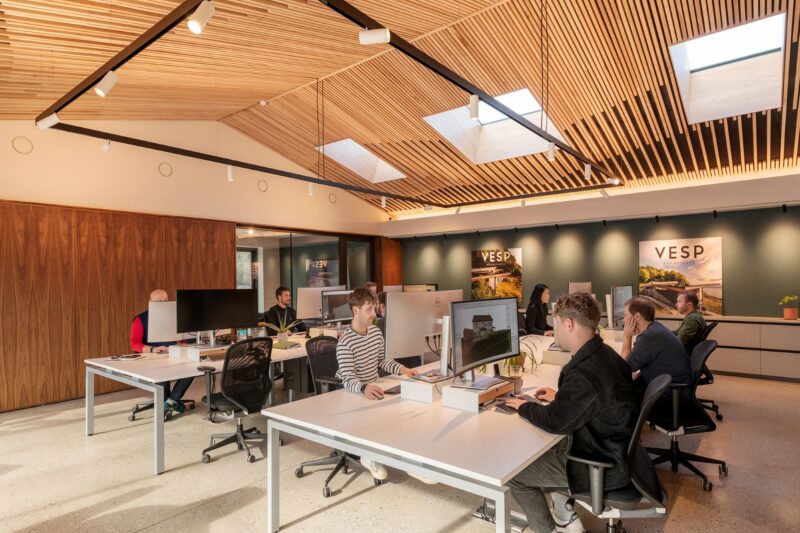
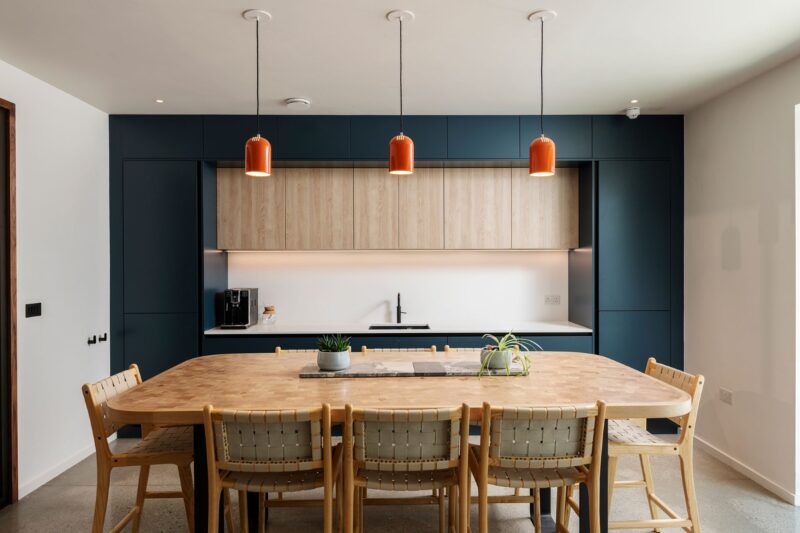
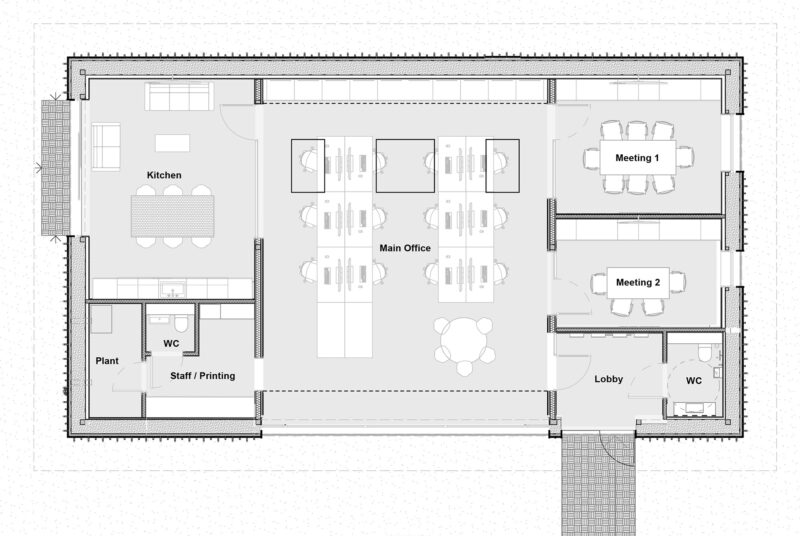
From the outset, the ambition was to create a workspace that was generous, calm and inspiring: a naturally lit open-plan studio that encourages collaboration, alongside private meeting rooms capable of hosting multiple meetings. A dedicated kitchen and breakout area provides space for pause and informal exchange throughout the day, while generous glazing and landscaped outdoor areas strengthen the connection between inside and out. Flexibility and longevity were central to the brief, with space for the practice to grow over time.
Equally important was the desire for the building to express the values we associate with good design: clarity, restraint, craftsmanship and sustainability. Above all, we sought to create a building that was simple and economical to construct, whilst feeling refined and uplifting to inhabit.
Design Approach
The building is organised around a central studio space, with supporting meeting rooms and breakout spaces to either side. This allowed for a highly efficient plan with minimal circulation space and a clear sense of openness throughout.
Passive house principles informed the design from an early stage. The accommodation is contained within a simple, single-storey rectangular form that minimises external surface area and reduces construction complexity and thermal bridging. The resulting envelope is highly efficient, robust and simple to build.
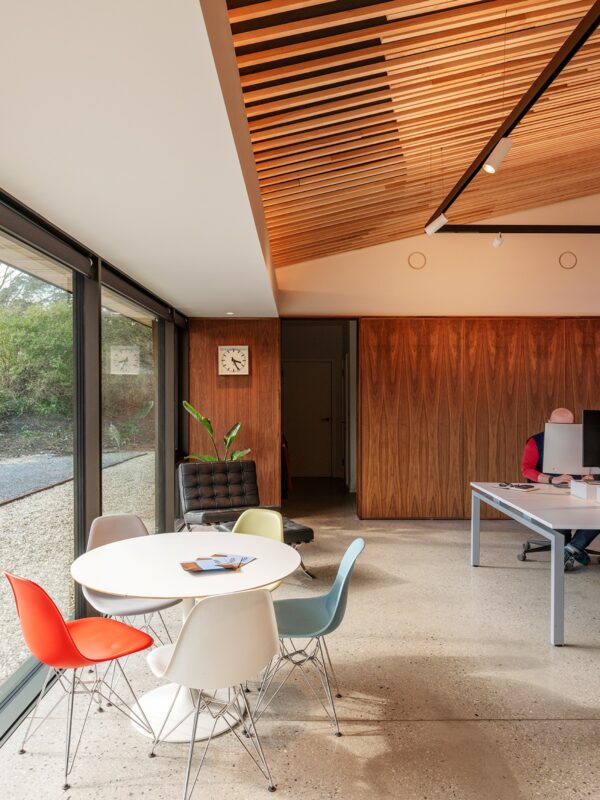
Large areas of glazing bring daylight into the interior and establish strong visual connections with the surrounding landscape. Although triple glazed, these large windows presented the weakest element within the thermal envelope. Their impact was offset through increased insulation performance within the walls, floor and roof. This balanced approach allowed the building to remain open and outward-looking while still achieving exceptional energy performance.
Construction and Materials
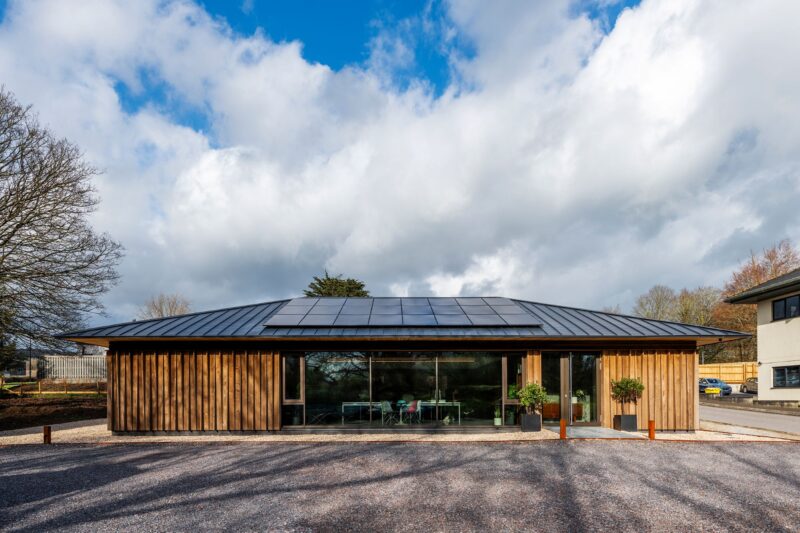
A shallow-pitched zinc roof extends beyond the façade to form generous overhangs on all sides, helping to control solar gain and prevent summer overheating. Three rooflights introduce daylight into the deeper parts of the plan while also enabling effective stack and cross ventilation during warmer months.
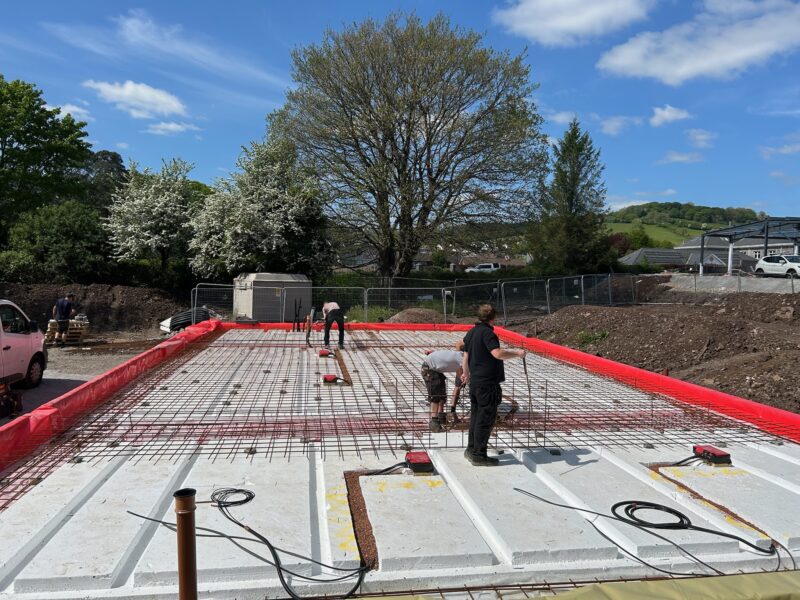
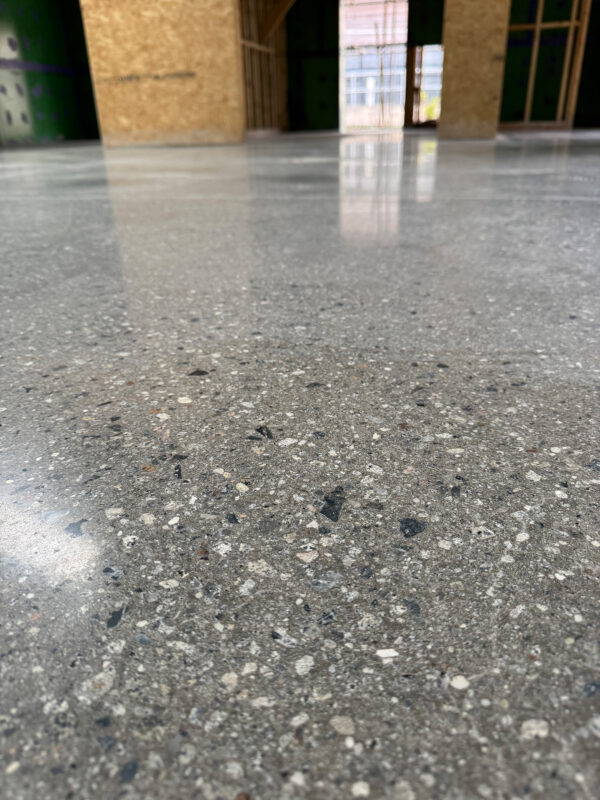
The structure combines an insulated raft foundation with a timber frame superstructure. By designing the slab within the thermal envelope, the concrete floor could be exposed, ground and polished to create a durable terrazzo-like finish. This removed the need for additional floor finishes, lowering both material use and embodied carbon.
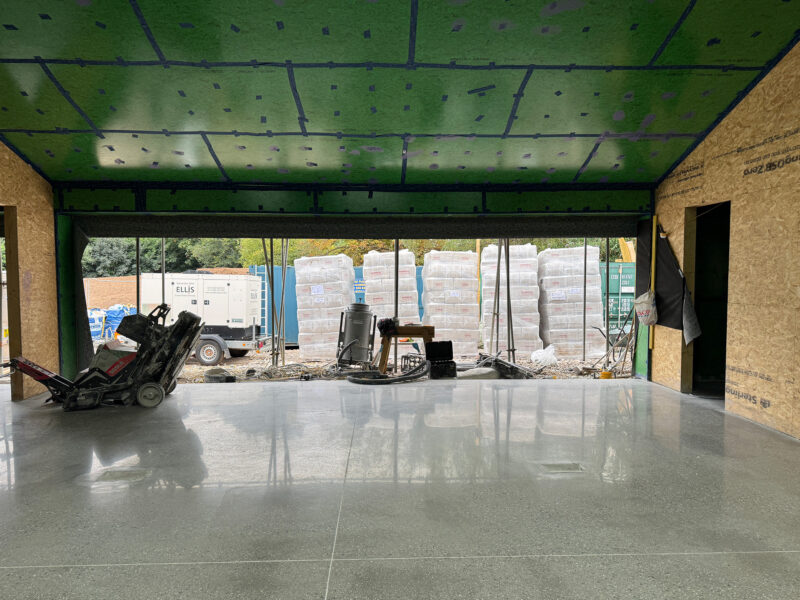
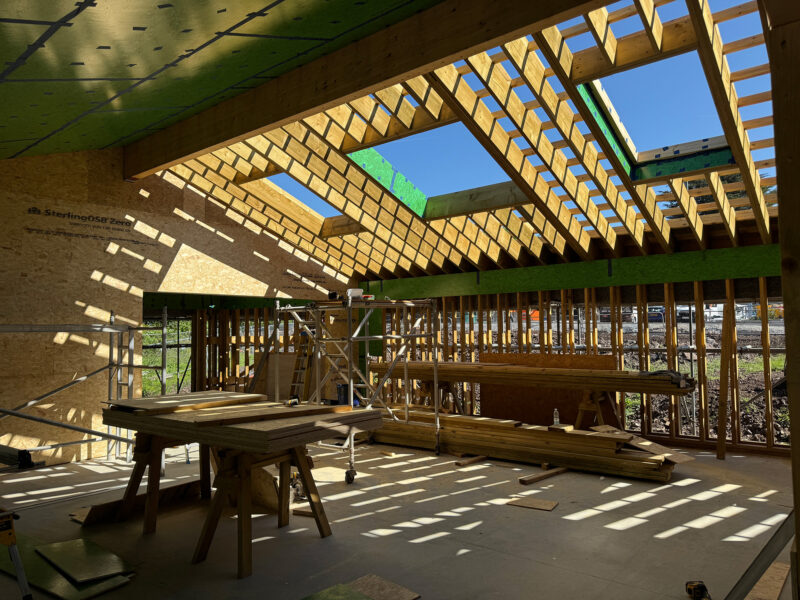
The wall and roof envelope utilises a twin-stud timber construction comprising inner and outer stud walls, connected by plywood fins and wrapped in specialist sheathings. Internally, Smartply provides a robust and reliable vapour control and airtightness layer, achieving an airtightness of 0.29ach.
Externally, Medite sheathing allows the wall construction to be vapour open. The 400mm cavity between is filled with Warmcel blown cellulose insulation, delivering excellent thermal performance with low embodied carbon.
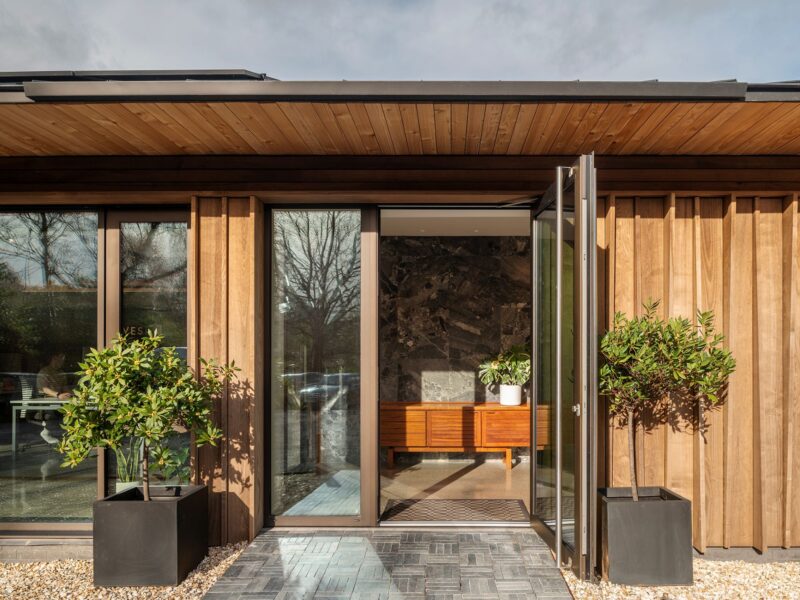
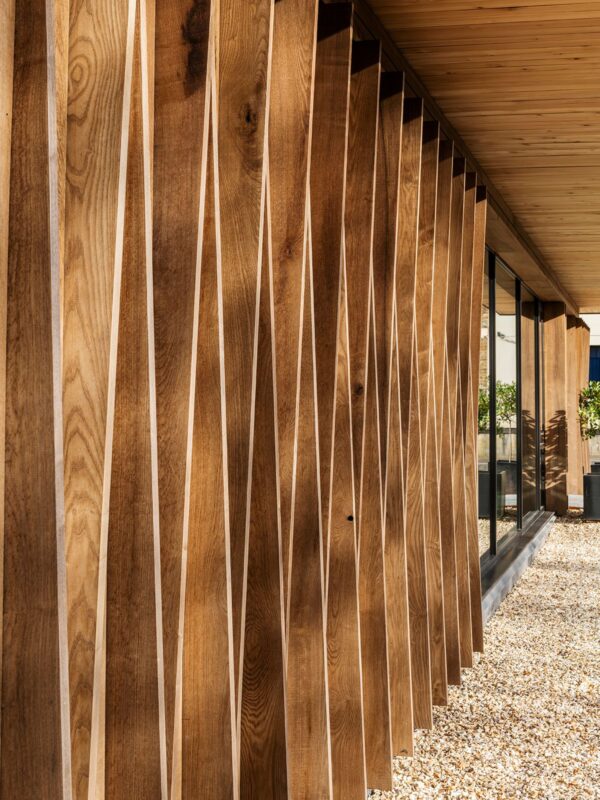
Timber cladding became a key architectural feature of the building. Given the simplicity of the overall form, it was important that the elevations possessed depth, texture and movement. Vertical timber fins project from the external walls in an alternating angular arrangement, creating patterns of form, light and shadow. The result is a dynamic façade that changes as you move around it, bringing the building to life.
The timber cladding reflects the practice’s commitment to resourcefulness and local collaboration. We worked with a nearby sawmill that sources timber from Ash dieback and thermally modifies it to produce a stable and durable cladding from a material that might otherwise go to waste.
Building Performance
Ventilation is provided by a mechanical ventilation and heat recovery (MVHR) system, designed to serve a 14-person office environment. The unit incorporates an integrated heat pump that tempers the incoming air and provides the building’s sole source of heating and cooling.
In practice, the combination of occupant activity, computer equipment, and passive solar gains, maintains a comfortable internal temperature in the winter months with minimal need for heating the space. During warmer months, the natural cross and stack ventilation has proved highly effective at rapidly purging excess heat from the building.
Photovoltaic panels and electric vehicle charging provision further supports the practice’s low-carbon ambitions, generating renewable energy on site and encouraging team members to transition to electric vehicles.
Future
Over the coming year we will continue to monitor the building’s in-use performance in collaboration with Warm, the Passivhaus certifiers. We also look forward to opening the building to local RIBA and sustainable construction interest groups, as well as spreading knowledge and skills to the local construction industry.
We are delighted with the completed building. The support provided by Warm throughout the design and construction process was invaluable, and the experience of inhabiting the space each day has reinforced our belief that sustainable buildings can be both highly efficient and deeply enjoyable places to work.