
At VESP architects we have an excellent success rate in achieving planning permissions, for new and replacement dwellings and the requirements of each Local Authority vary. There are many factors that must be considered in any planning application for a new or replacement dwelling. Landscape impact, design quality, scale, contextual appropriateness and ecological impact to name a few. However, there are two requirements specific to Cornwall that property owners should consider if they are planning a new-build or the replacement of their home:
-
Development within the Coastal Vulnerability Zone (Policy CC1)
-
The requirement to meet Net Zero Carbon (Policy SEC1)

Policy CC1 – Coastal Vulnerability Zone
Cornwall Council’s Climate Emergency Development Plan (Feb 2023) outlines the requirement for new development to consider how it affects, or is affected by, coastal erosion. The Climate Emergency Development Plan policy map defines areas considered as being within the ‘coastal vulnerability zone’.
If your site is within or adjacent to the coastal vulnerability zone, then for new build or replacement dwellings you must clearly demonstrate, via a Coastal Vulnerability Assessment, that the proposed dwelling is safe for its planned life, aligns with the shoreline management plan’s intentions for that section of coast, won’t make coastal change worse, and will allow adaptation of the coastline and communities. Specialist geotechnical engineers can help to prepare this, and should coordinate their report with any architectural proposals.
The below is paraphrased from the guidance document.
Cornwall’s coastline is around 700km long with many coastal settlements and communities. It is important that coastal erosion is taken into account in determining the appropriateness of proposed development, as coastal change represents a threat to some coastal communities. Rates of erosion and incidents of flooding are expected to increase throughout this century because of the increasing frequency and magnitude of storms and rising sea levels as a result of global warming.
The planning process seeks to ensure that development in areas subject to coastal change will be sustainable and safe. It must also ensure that development does not increase risk to others by impacting on the coastal processes.
Specifically for new buildings the CC1 policy states:
1) New development including replacement buildings (unless classified as exempt) within the Coastal Vulnerability Zone will only be permitted where it can be demonstrated through a Coastal Vulnerability Assessment that it:
a) Is consistent with policy statements for the local policy unit in the current Shoreline Management Plan; and
b) would not impair the ability of communities and the natural environment /biodiversity to adapt sustainably to the impacts of coastal change (including coastal squeeze); and
c) will be safe through its planned lifetime, without increasing risk to life or property; and
d) provides safe access and egress for the site and its users; and
e) would not affect the natural balance and stability of the coastline or exacerbate the rate of shoreline change to the extent that changes to the coastline are increased nearby or elsewhere; and
f) where applicable, makes provision for coastal access and the South West Coast path to be rolled back (moved inland).
Exceptions will only be granted within the Vulnerability Zone for the creation of garden or open space or where it can be demonstrated that a time limited permission would be operationally necessary for a coastal compatible use and consistent with the above criteria.
There are also limits placed on the establishment of sea defences…
2) Private sea defences or cliff stabilisation works will only be permitted where it can be demonstrated that the works would accord with wider coastal management objectives and are:
a) consistent with the Shoreline Management Plan; and
b) required for public health and safety purposes or;
c) are intended to conserve heritage at risk and remain consistent with the Shoreline Management Plan;
And below-ground drainage works
3) Soakaways and other infiltration based sustainable systems within 5 metres of the Cornwall Coastal Vulnerability Map (CCVM) zone or discharge of surface water over or down the face of a cliff will not be permitted unless demonstrated through a Coastal Vulnerability Assessment that the proposed drainage method would not adversely affect coastal stability.
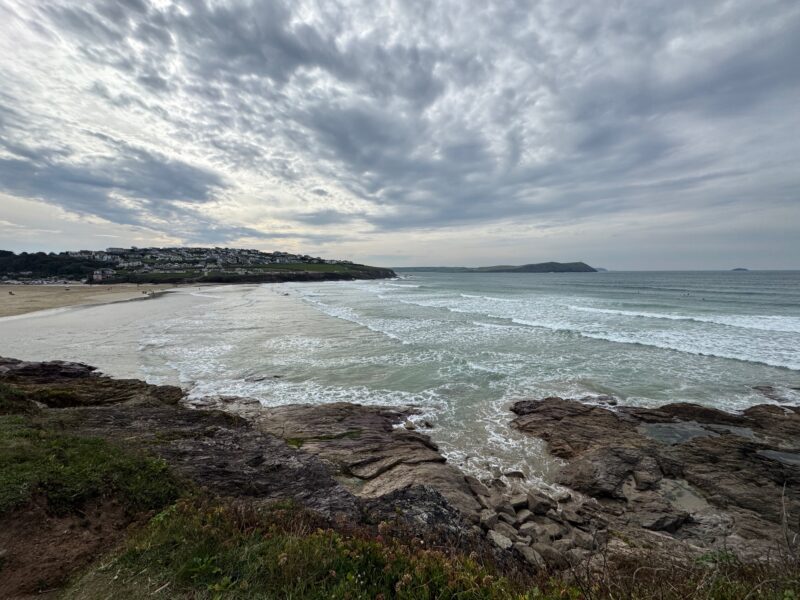
Putting this into the context of a new dwelling or replacing an existing one, in or adjacent to the coastal vulnerability zone:
-
If you are proposing to build a completely new dwelling , you must satisfy all of the above criteria. The bar is high, given the coastal change risk.
-
If you are proposing a replacement dwelling (i.e., replacing an existing house) the policy still applies — so you still need a Coastal Vulnerability Assessment and must show the site is safe over the lifetime, consistent with SMP, etc.
-
If the existing dwelling is in a more vulnerable part (e.g., where the SMP indicates “no active intervention” or “managed realignment”), then replacing or newly building a house becomes much harder because you must demonstrate the lifetime safety of the new dwelling and that you’re not undermining adaptation of the coastline.
-
The assumption is that the design lifetime is about 100 years — so the assessment must show the dwelling remains safe without requiring new or improved coastal defences within that 100 years.
-
The policy is not saying “no new dwellings” in the coastal vulnerability zone, but it significantly raises the threshold for approval. Proposals that cannot demonstrate the above will typically be refused or need reconsideration.
-
For replacement dwellings, the fact that there is an existing dwelling may help (if you’re not increasing the scale of development) but it does not automatically guarantee permission — the policy still must be satisfied.
Here at VESP architects we can help you navigate this policy if your home or proposed new dwelling is located on the coastline of Cornwall.
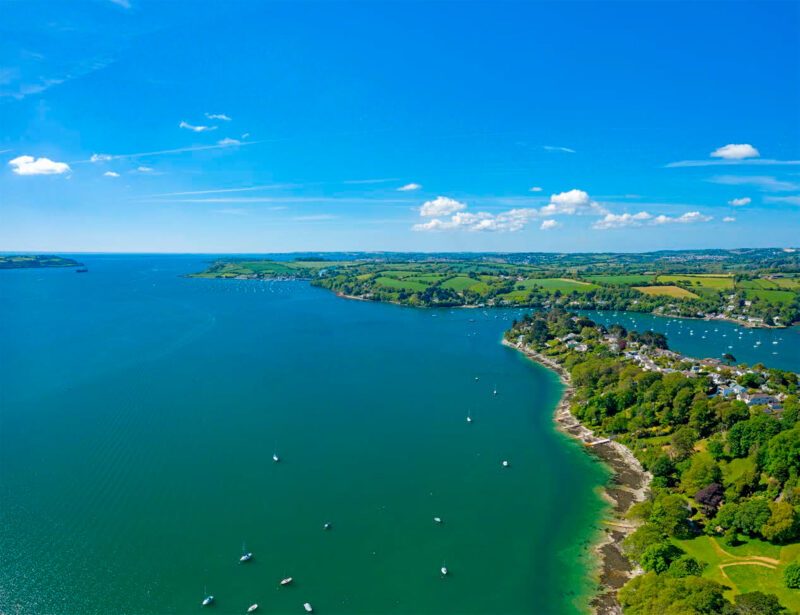
Policy SEC1 – Sustainable Energy and Construction
Another requirement of Cornwall Council’s Climate Emergency Development Plan (Feb 2023) outlines the requirement for new homes to meet high standards of thermal and energy use performance. The policy states:
Residential development proposals will be required to achieve Net Zero Carbon and submit an ‘Energy Statement’ that demonstrates how the proposal will achieve:
• Space heating demand less than 30kWh/m2/annum;
• Total energy consumption less than 40kWh/m2/annum; and
• On-site renewable generation to match the total energy consumption, with a preference for roof mounted solar PV.
Where the use of onsite renewables to match total energy consumption is demonstrated to be not technically feasible (for example with apartments) or economically viable renewable energy generation should be maximised as much as possible; and/or connection made to an existing or proposed low carbon district energy network; or where this is not possible the residual energy (the amount by which total energy demand exceeds the renewable energy generation) is to be offset by a contribution to Cornwall Council’s Offset Fund.
Where economic viability or technical constraints prevent policy compliance, proposals should first and foremost strive to meet the space heating and total energy consumption thresholds. Proposals must then benefit as much as possible from renewable energy generation and/or connection to an existing or proposed low carbon district energy network. As a last resort, any residual energy is to be offset by a contribution to Cornwall Council’s Offset Fund, as far as economic viability allows.
These requirements set a high bench-mark, and generally call for much higher standards of performance than the current building regulations Part L. Whilst certainly not impossible, it is certainly something that should be considered by the architects and clients when designing the new house. Things like the amount of glazing, the complexity of the form and amount of external wall and roof area, all contribute to the efficiency of a design.
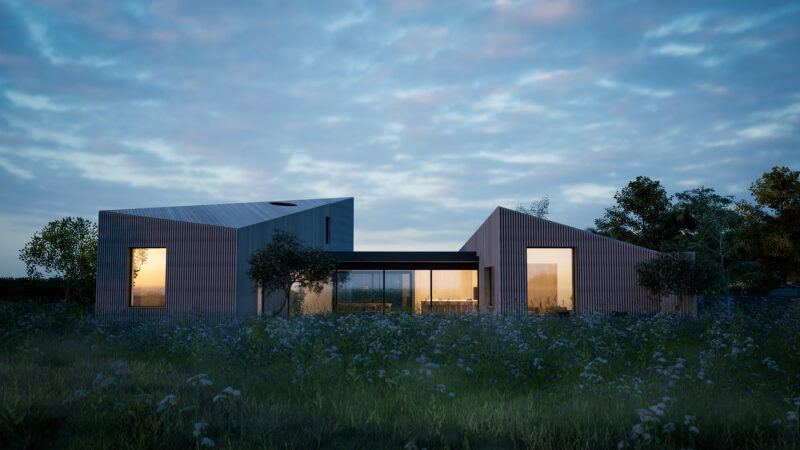
At VESP we understand how to balance these considerations whilst still ensuring the design meets the aesthetic and functional requirements of our clients. VESP architects are certified Passive House designers, and the requirements of Cornwall council are not far away from Passivhaus standards. We have the ability in-house to model our designs in PHPP, the passive house modelling software, and this can be used to provide the data required by Cornwall council.
Or, working with energy assessors, the design can be modelled through SAP, to show compliance with this policy. This modelling will inform what thermal fabric performance (u-values) , air-tightness standard, and how many PV panels would be required to balance the estimated energy use of the house. This information is provided alongside the proposals when a planning application is made.

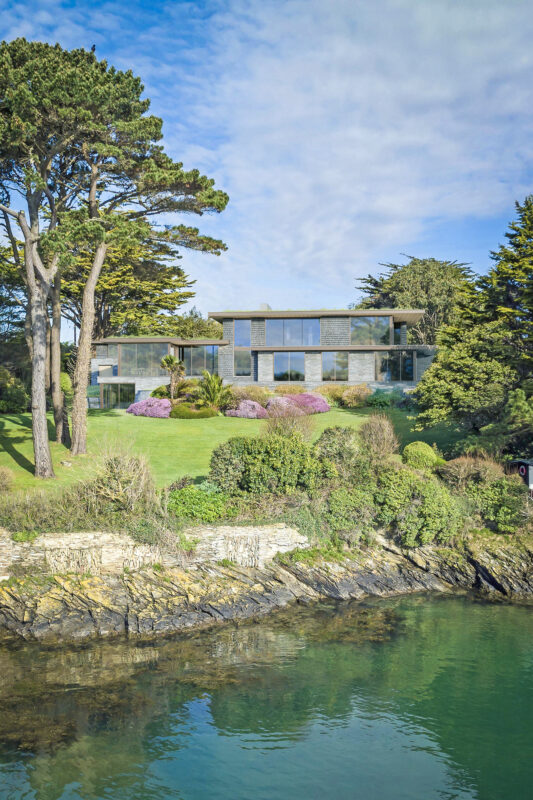
Summary
For both of these Cornwall-specific requirements, VESP architects can support you in your journey to gaining planning permission for a new build dwelling. We pride ourselves on the service we give our clients and the management of their projects, making the process as simple as possible. If you would like to discuss your own project, please contact us here.